
If you’re running marketing for a real estate brand, you already know the deal. Zillow, Realtor.com, and Redfin sit at the top of nearly every high-volume query, and AI Overviews are quietly compressing what’s left of the informational clicks below. That’s the real estate marketing challenge in 2026. Everyone else has already adopted the basics, so pulling ahead now takes a creative, targeted strategy.
This guide walks through a five-step framework for building a real estate marketing plan. From there, you’ll get a breakdown of how AI search and portal competition are reshaping the search engine results pages (SERPs), plus a client case study showing what real growth looks like when the strategy lands.
You’ll finish this guide with a clear picture of what to do next for your real estate marketing strategy in 2026.
Key Takeaways
- Zillow, Realtor.com, and Redfin dominate head-term SERPs, so marketing wins come from targeting long-tail and hyperlocal queries the portals ignore.
- Google’s AI Overviews are causing people to click less. Structure content for AI citation and reinforce E-E-A-T signals to stay visible.
- A five-step marketing plan (ICPs, brand identity, website, omnichannel, offline) is the foundation. Skip a step and everything downstream weakens.
- Owned channels like email and direct mail are how “the little guy” can fight against the real estate giants by routing buyers around third-party portals.
- NP Digital used the tactics in this guide to stack significant wins for our client, Homeway Real Estate.
What Is Real Estate Marketing?
Real estate marketing is the practice of promoting properties available for sale or rent. It takes the Four Ps of marketing (Product, Price, Place, and Promotion) and adapts them to the real estate market.
The marketing plan is important because of the hyper-competitive nature of the real estate industry. A proper strategy could give you a powerful competitive edge.
Here are the three main benefits of marketing for real estate professionals:
- Builds trust with the customer base: A consistent presence assures potential buyers that they’re dealing with the right person to help them find their dream property.
- Makes the brand more memorable: A recognizable brand increases the chances that buyers will seek the brand out when they enter the market.
- Enables more efficient selling: A long-term marketing strategy provides established channels to quickly promote new properties when they become available, cutting down on promotion and admin costs.
National Association of Realtors (NAR) data tells us that every buyer uses the internet at some point during their home search, and 46 percent take their first step online (versus 20 percent who start by contacting an agent). The marketing strategy used could be the difference between a brokerage that compounds visibility for years and one that keeps starting from zero on every new listing.
How to Build a Real Estate Marketing Plan
You can develop a solid real estate marketing management plan in five simple steps. The order matters because each step sets up the next, so don’t skip anything. It usually means going back to fix something later.
We’ll start with the most important step of any marketing plan: defining who you’re trying to reach. From there, we’ll discuss your brand’s presence and finish with the optimal digital strategy, as well as offline channels you can use to supplement it.
Here’s how the framework breaks down.
1. Define Your Ideal Customer Profiles (ICPs)
What type of people would make ideal sellers or renters?
Even if you understand your ideal customer, it’s important to map them out clearly on paper. These definitions will form the basis of the real estate marketing plan you implement, so ICPs could always use more fine-tuning. The more detailed, the better.
Most agents typically target several distinct ICPs that cover a whole portfolio of properties.
Here are three example ICPs:
- Three to four-person families with a joint annual income of $150,000 looking to purchase suburban detached or semi-detached houses.
- Young professionals with high disposable income searching for inner-city apartments to rent in the $2000 to $3000/month price range with an active local nightlife nearby.
- Retirees with a budget of $300,000 to $500,000 in the market for semi-rural properties with good car access to local amenities like hospitals, supermarkets, and shops.
Research the following attributes when putting together your customer profiles:
- Budget for rent or purchase
- Desired location and property type
- Specific property features (garage, bathrooms, garden)
- Timeline (weeks or months)
- Required nearby amenities (schools, transport, roads, etc.)
Treat these definitions as segmentation blocks you can plan against. Each ICP needs its own creative and channel mix. It also makes sense to give each segment its own definition of a win.
Take the three examples above. The suburban family segment probably converts best on Facebook and YouTube with school-district and neighborhood-tour content, and you might measure campaign success on booked showings per dollar. The young-professional rental segment leans on Instagram Reels and TikTok walkthroughs of the units and the neighborhood, with success measured by rental applications submitted. Retirees might respond better to a Google search or a referral-driven email, and success there could be measured by the number of in-person consultations booked.
2. Build a Consistent Brand Identity
Branding is a long-term play. The visual below, based on NP Digital research, shows that it takes five years or more to build a recognizable brand. Consistency and a long-term outlook are key.
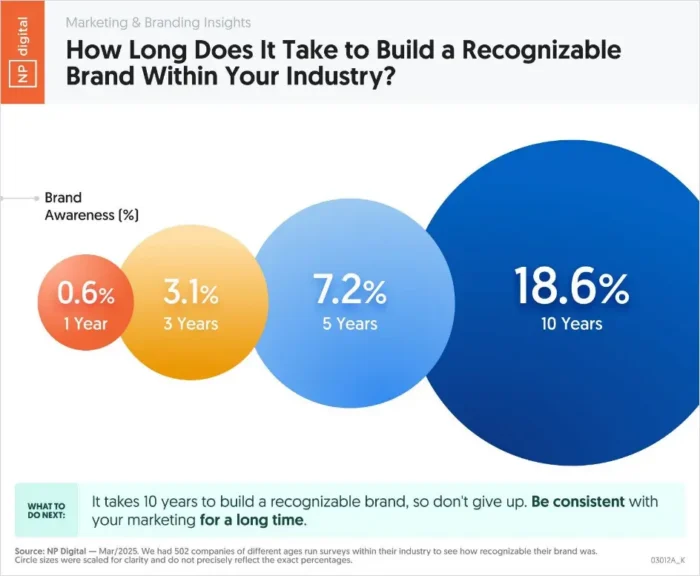
However, once you’ve passed that five-year mark, you’ll have an incredibly valuable asset, one that will help sell properties more quickly, and often at a higher price point, than other listings.
Here are the three main components of effective brand building:
- Regular content output: Repeatedly appearing in front of your audience means they’re more likely to think of, or recommend, you when they’re ready to buy.
- Tone of voice: Is your messaging polished and professional to resonate with luxury buyers, or is it a more conversational, casual tone to appeal to families and first-time buyers?
- Recognizable brand assets: Assets include your logo, website color scheme, email template, etc.
3. Build a High-Converting Real Estate Website
When potential buyers or renters visit your sites, they begin converting from marketing-qualified leads (MQLs) to sales-qualified leads (SQLs).
An SQL is a lead that has shown a high degree of interest in a specific property or listing and is ready for a salesperson to walk them through the buying process.
With this in mind, it’s critical that your real estate website marketing converts, like the Keller Williams Luxury example below.
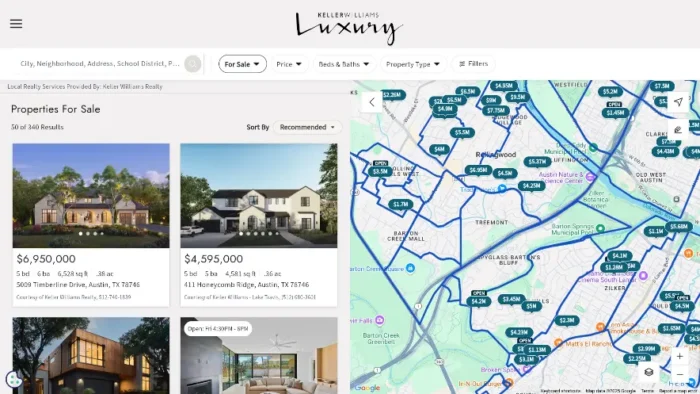
Source: https://luxury.kw.com/search/sale/Austin-TX-USA/929288?viewport=30.74016159213386%2C-96.85265755%2C29.850865913177792%2C-98.61047005&q=Austin%2C+TX%2C+USA
Here’s a quick checklist for high-converting real estate website design:
- Sleek, minimal design
- Easy-to-use search filters
- High-quality images
- Video walkthroughs of properties
- Comprehensive property descriptions
- Transparent pricing
- A map for visualizing locations
- Clear “Book a Viewing” calls to action (CTAs)
- Visible address and phone number
- Customer testimonials if appropriate
While all these site elements are essential to optimizing your real estate site for search, there’s a technical side to consider as well:
- Core Web Vitals: Google’s Core Web Vitals measure things like page loading, responsiveness, and visual stability. Elements like Hero images and property carousels can cause issues, so it’s best to constantly monitor website pages with tools like PageSpeed Insights.
- Mobile-first indexing: Google crawls and ranks sites off the mobile version, so keep a user’s smartphone browsing experience in mind as you tweak pages and other content.
- RealEstateListing schema markup: Structured data helps crawlers better interpret property listings for rich results and AI Overview citations, potentially increasing click-through rates (CTRs).
- Portal strategy: Zillow and Realtor.com will always outrank you on head terms like “homes for sale in [city],” so use them for reach and your own site for email capture and retargeting.
4. Build an Omnichannel Digital Strategy
You’ve defined an ICP, refined your tone and brand identity, and designed a website primed for conversions.
Now it’s time to start promoting listings.
My team and I found that the average customer requires 11.1 marketing touchpoints before making a purchase. This means that an omnichannel strategy incorporating multiple marketing techniques is critical to success.
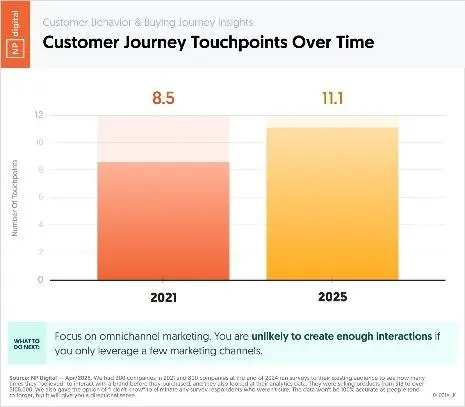
Source
Social media should be a sizable part of your omnichannel real estate marketing strategy. Per NAR’s Technology Survey, 39 percent of agents cite social media as their top lead-generating technology.
Short-form video platforms like TikTok are a growing channel in 2026. However, still only 16 percent of agents use them for marketing, presenting an untapped opportunity for marketers and agents looking to build visibility for their real estate sites.
Here are the avenues you should consider for your marketing mix:
- YouTube: Publish property walkthroughs and more general video content, such as “The Top 10 Places to Live in Chicago,” that might appeal to your target market.
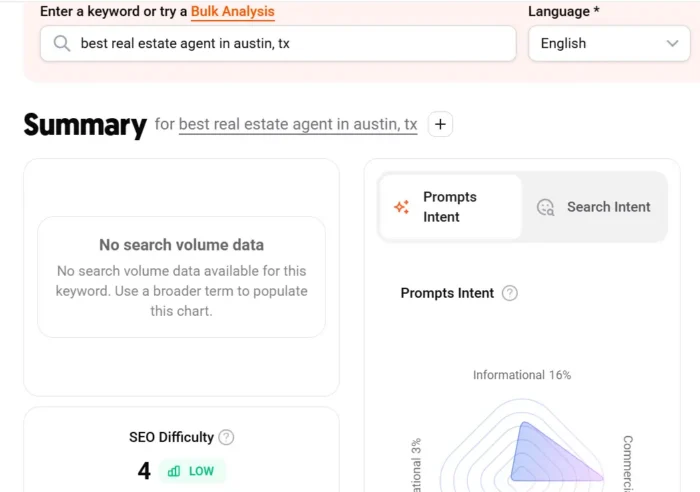
- Pay-per-click (PPC): Run PPC ads for property listings targeting hyperlocal keywords, such as “best real estate agent in [TOWN]” or “luxury homes specialist [CITY]” that have lower SEO difficulty than the ones the big portals are targeting (see image below).
- SEO: Target long-tail neighborhood queries and optimize for ranking in local search rather than fighting for head terms. Also, claim and optimize your Google Business Profile (GBP) to show up in local business and map-based searches.
- Organic social: Post short-form video walkthroughs and neighborhood content weekly, not just when a new listing drops. NAR data shows 58 percent of buyers found social video posts useful during their home search.
- Paid social: Boost your top-performing organic posts to lookalike audiences of your ICPs instead of starting cold.
- Email: Send weekly or biweekly listing roundups segmented by the ICPs you defined in Step one. Segmented campaigns generate 30 percent more opens and 50 percent more click-throughs than broadcasts.
5. Identify Viable Offline Channels
Online marketing may currently be the most prominent real estate marketing strategy, but there are still significant (often underleveraged) offline opportunities.
For example, research shows that direct mail has a 161 percent return on investment (ROI) when sent to house lists, outperforming both email and search.
Consider all of the following marketing channels as part of a multi-pronged plan:
- Print media
- In-person events
- Direct mail
- TV and radio
- Cold calling
Offline channels round out the framework. Now, let’s look at the two 2026-specific challenges reshaping how to approach the SERPs: AI Overviews and portal competition.
AI Search and Platform Competition
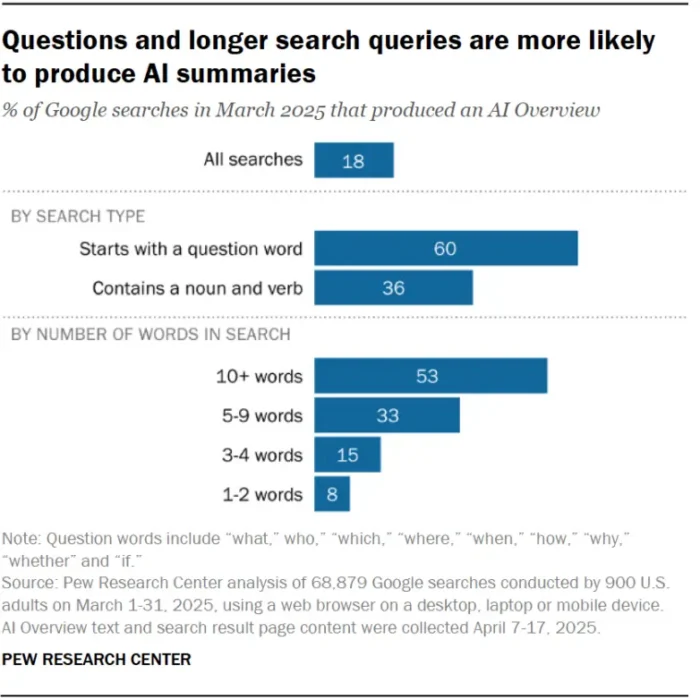
Two structural shifts define real estate search in 2026. First, Google’s AI Overviews now appear on roughly 18 percent of all searches, according to a Pew Research study. The same data shows that users click a traditional result 8 percent of the time when an AI Overview is present, versus 15 percent when it isn’t. For informational real estate content (“what does escrow mean,” “how does closing work”), this compresses organic clicks even for pages that rank, but targeting queries with question words like these gives you the best shot at AI visibility, as the graph below illustrates.
Source: https://www.pewresearch.org/short-reads/2025/07/22/google-users-are-less-likely-to-click-on-links-when-an-ai-summary-appears-in-the-results/
To stay visible, structure content so that AI systems can cite it, with a clear header structure pointing to direct one-sentence answers. FAQ sections that mirror how buyers phrase questions improve alignment with search intent and user language.
Reinforce experience, expertise, authoritativeness, and trustworthiness (E-E-A-T) signals by making agent credentials and client results visible on-site, backed by content that demonstrates genuine local expertise. Focus your keyword strategy on finding the keywords buyers search locally, where AI Overviews appear less frequently.
A more thoughtful keyword research strategy also addresses the second challenge: competing with the likes of Zillow and Realtor.com.
Portals dominate popular terms, such as “homes for sale in Denver.” The AI-era strategy is less about outranking them than becoming a source that AI systems cite.
Earning local backlinks can strengthen the signals search and AI-powered discovery systems use to assess a business’s relevance and authority. Just be sure to pursue linking opportunities from reputable sources, like regional publishers and community sites, similar to traditional SEO best practices.
Positioning agents as the authority through backlink building and a targeted local keyword approach should help grow their email lists, which they can use to retarget buyers directly without a portal or an AI Overview in between.
Real Estate Marketing in Action: An NP Digital Case Study
What do these real estate marketing tips look like in practice? Here’s how my team at NP Digital implemented some of the strategies you’re reading about now for Homeway Real Estate, a regional brokerage that competed against national portals in its home market and achieved impactful wins.
Situation: Homeway Real Estate, a growing Pennsylvania brokerage serving the Lehigh Valley, Stroudsburg, and Lancaster markets, needed a website that would drive sales and build brand awareness across its expanding footprint.
Strategy: NP Digital focused on SEO fundamentals: strengthening the technical foundation, targeting competitive keywords for high-priority pages, and refreshing existing content while producing new pieces aimed at Homeway’s target buyers.
Outcomes (12 months):
- 200 percent increase in organic impressions
- 350 percent increase in organic traffic
- 17,794 ranking keywords earned
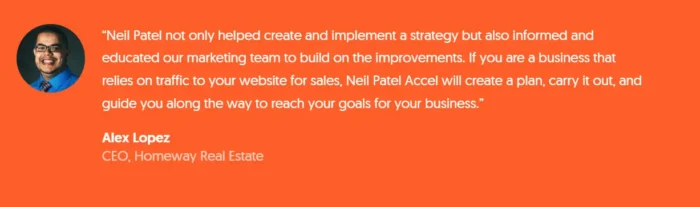
An even more meaningful result was helping Homeway succeed in finding homes for 500 families. Homeway CEO Alex Lopez was happy with the results and appreciated the NP Digital team for crafting and executing a personalized, winning strategy:
Having the right tools makes real estate marketing management easier. Here’s a simple starter tech stack kit that hits all the essentials you’ll need:
| Tool | Primary Use |
|---|---|
| Hootsuite | Schedule posts across multiple social platforms from one dashboard |
| Canva | Design listings, ads, and social graphics without a designer |
| Follow Up Boss (fub by Zillow) | Track leads and automate follow-ups from a real-estate-specific customer relationship management (CRM) tool |
| Ubersuggest | Keyword research, content ideas, and rank tracking |
| Mailchimp | Segmented email campaigns and lead capture forms |
| Google Ads and Meta Ads | Paid search and paid social ad platforms |
| ChatGPT | Draft listing descriptions, content briefs, and outreach copy |
FAQs
What is a real estate marketing plan?
A real estate marketing plan is a documented strategy for how a brokerage will attract buyers and sellers. Its job is to align every marketing decision, from brand voice to channel spend, around a clearly defined customer so nothing gets built or bought without a reason. The value of documenting it is that scattered channel activity begins to compound into brand equity over time.
How do you create a real estate marketing plan?
A real estate marketing plan starts with the audience. Once the target customer profiles are documented specifically enough for a marketer to plan against, everything downstream becomes an extension of that definition rather than a separate strategic exercise. Skip the audience work, and every other decision is a guess.
How do you do real estate marketing?
Real estate marketing is the ongoing work of putting a brokerage in front of buyers and sellers at the moment they’re making decisions. The winning approach is a consistent presence across the channels that actually reach the target audience, not picking a single perfect tactic.
How can you improve real estate marketing?
The biggest gains in real estate marketing come from narrowing focus rather than adding more activity. Marketers and agents who win in 2026 double down on hyperlocal content and neighborhood expertise. Structure that content so AI systems can cite it in their answers, and invest in owned channels, such as email and direct mail, that route buyers around third-party portals.
What should you look for in a real estate marketing agency?
The best real estate marketing agencies show a portfolio of real-world results rather than repackaged ecommerce case studies. Beyond the results, look for transparent reporting and a strategy grounded in your local market. Agencies that treat brokerages as long-term brand assets outperform those focused only on running ads.
Conclusion
Sound real estate marketing fundamentals are the best way to succeed, despite how competitive the industry is in 2026.
Assess your current channel mix against the five-step framework above. Identify the gaps where you’re currently not showing up and begin reaching those audiences with hyper-local or long-tail keyword content.
Don’t try to stand toe-to-toe against the giants like Zillow and Realtor.com for popular search terms. They may seem “sexy,” but marketing specificity is the way to win. Plus, targeting rarer, long-tail queries with question words is a better strategy for AI visibility.
This guide gives you the foundational tips and tools you need to get started. If you’re looking for more specific guidance, reach out to my team at NP Digital and let’s see how we can put these marketing principles to work for you.